
5W UV galvo
xTool F2 Ultra UV — Hands-On Review
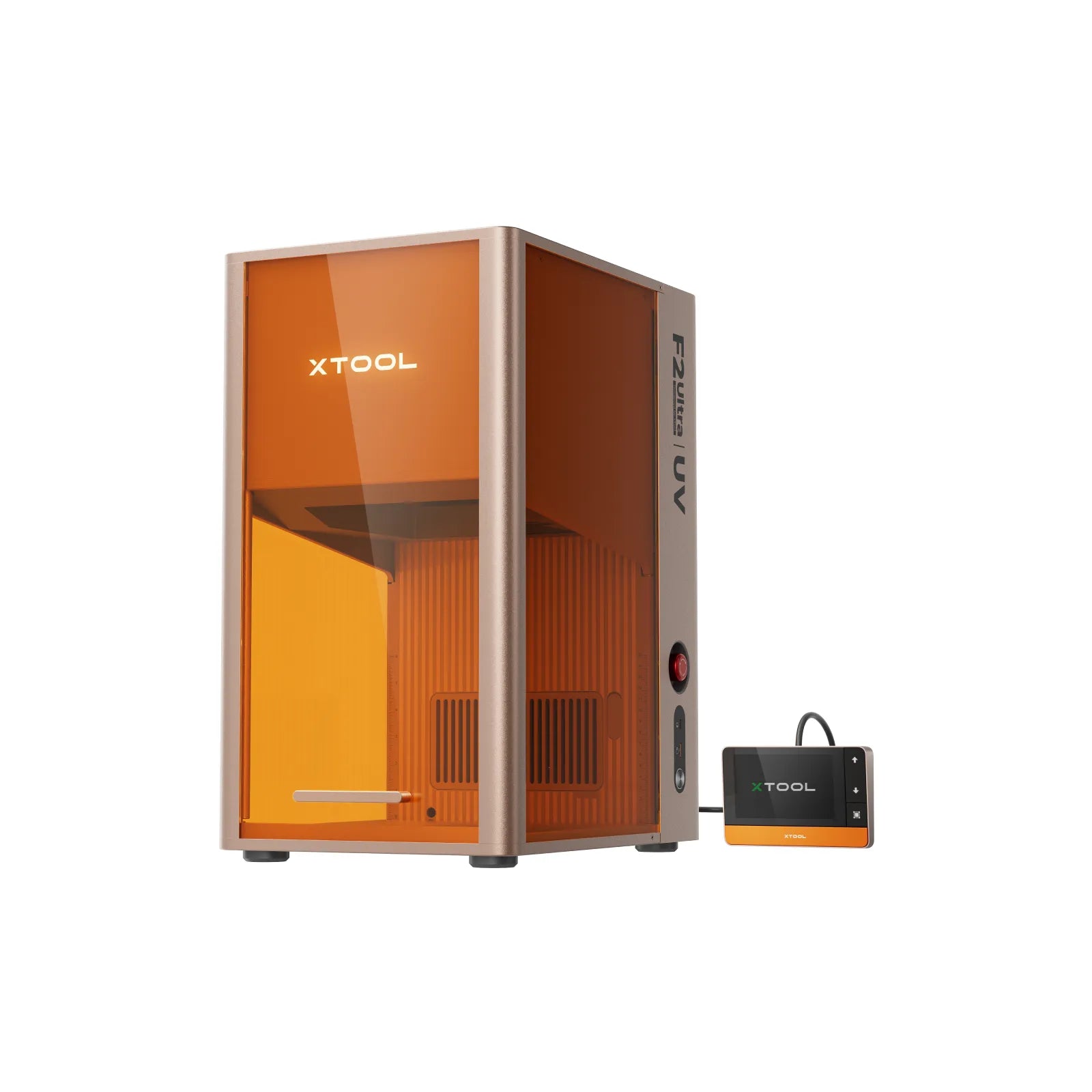
The F2 Ultra UV is a 5 W UV galvo built for low-heat-input marking. It suits heat-sensitive substrates that fibre or CO₂ tend to scorch, melt or distort, and it also produces fine surface marks on metals and plated finishes where minimal heat input matters more than depth.
BVLS is an official xTool Squad Service Station and xTool affiliate partner. We may earn commission on qualifying purchases at no additional cost to you.
Who it's for
Where this machine actually earns its keep.
- Cosmetics, fragrance and drinks brands marking glass and plastic packaging.
- Studios marking polycarbonate, acrylic and plated awards with minimal heat input.
- Anyone working with leather, anodised finishes or coated electronics enclosures.
- Jewellers and giftware studios needing fine surface marks on plated and finished pieces.
Strengths
- Low heat input — far less melting, scorching or surface deformation on heat-sensitive materials than fibre or CO₂.
- Photographic-quality marks on glass and clear plastics.
- Fine surface marking on metals, including plated finishes (gold, silver, rhodium), following sample testing on your own stock.
Honest limits
- 5 W of UV suits marking rather than deep engraving; it will cut compatible thin non-metal materials, but cutting is not its main role.
- Throughput on heavy raster fills is slower than the fibre dual.
- Optics and source are more expensive to service long-term than diode or CO₂.
Materials
What we actually mark, cut and engrave on it.
- Glass bottles and jars — crisp, frosted-look marks.
- Polycarbonate, ABS, acrylic — clean marks with minimal melt halo.
- Premium leather — light surface marks with low heat input.
- Plated jewellery and giftware — fine surface marks; plated and coated stock should be sample tested before production.
See the full materials & finishes list, or browse the portfolio.
At a glance
The spec, briefly.
| Source | 5 W UV galvo (cold process) |
|---|---|
| Best for | Heat-sensitive substrates, glass, plastics, plated metals |
| Format | Galvo — fixed field, fast |
| Rotary | Compatible (sold separately) |
Frequently asked
- Why pay for UV when fibre and CO₂ exist?
- Because fibre and CO₂ put far more heat into the substrates UV is designed for. If you mark glass, plastics, plated parts or premium leather regularly, UV is the lowest-heat-input option for protecting the surface — with material choices confirmed by sample testing.
- Will it mark dark plastics?
- Most engineering plastics mark well; some dyed plastics give weaker contrast. We test sample materials before quoting production runs.
Want one-to-one advice before you buy? Book an xTool consultation — we can place the order with xTool on your behalf after the call.
Related reading
Journal
xTool F2 Ultra UV vs F2 Ultra Dual: which one for your work?
Both are flagship galvos, but they're built for almost opposite jobs. Here's how to decide which xTool F2 Ultra you actually need.
Read more about xTool F2 Ultra UV vs F2 Ultra Dual: which one for your work?Journal
xTool O1 Omni Printer: Editions, Workflows and Business Fit
The xTool O1 ships in three factory configurations, not three price tiers. Here's what each edition prints, which workflows it unlocks, and where it fits in a small personalisation business.
Read more about xTool O1 Omni Printer: Editions, Workflows and Business FitService
xTool consultation
Objective pre-purchase advice from a studio that runs the machines daily.
Read more about xTool consultation